
























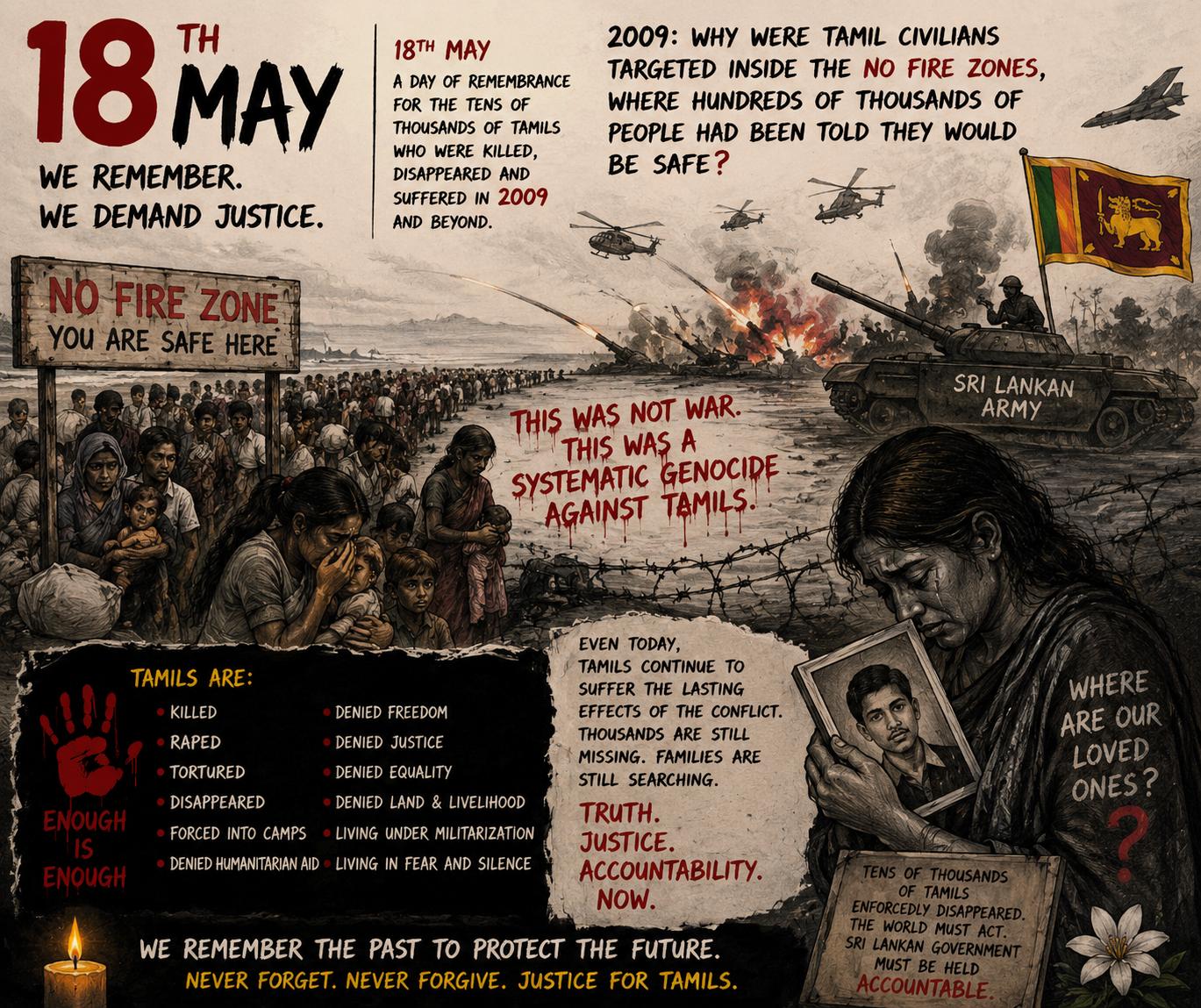
2009: Why were Tamil civilians targeted inside the “No Fire Zones”, where hundreds of thousands of people had been told they would be safe?
It is very clear that this was a systematic genocide against Tamil civilians carried out during the final phase of the war. According to multiple reports and investigations, an estimated 40,000 to 70,000 Tamil civilians were killed during the final months of the war in 2009, with the exact number uninvestigated but the highest estimate reaching as many as 169,796. while many others were injured, displaced, detained, or subjected to enforced disappearances. There have also been longstanding allegations of torture, sexual violence, unlawful killings, and other serious human rights abuses against Tamils during and after the war.
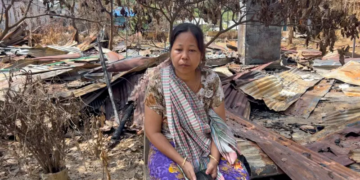
Seventeen years have passed since the war ended, but the pain and trauma still remain. Many Tamil children were born during the war, grew up surrounded by violence, displacement, fear, and loss, and struggled to continue their education under war conditions. Many families lost their homes, livelihoods, and loved ones, leaving deep scars that continue across generations.
Even today, many Tamils continue to face the lasting effects of the conflict, including militarization, land disputes, economic hardship, lack of justice, and fear caused by ongoing intimidation and surveillance in some areas. Many women, children, and war survivors continue to suffer from deep psychological trauma, yet there is still not enough mental health and psychological support available for affected communities.
Many families are still searching for loved ones who disappeared during the war and continue to demand truth, accountability, freedom, dignity, and equal rights.
The Sri Lankan government should be held accountable for the civilians who were killed and forcibly disappeared, while survivors and affected families continue their search for truth and justice.