











































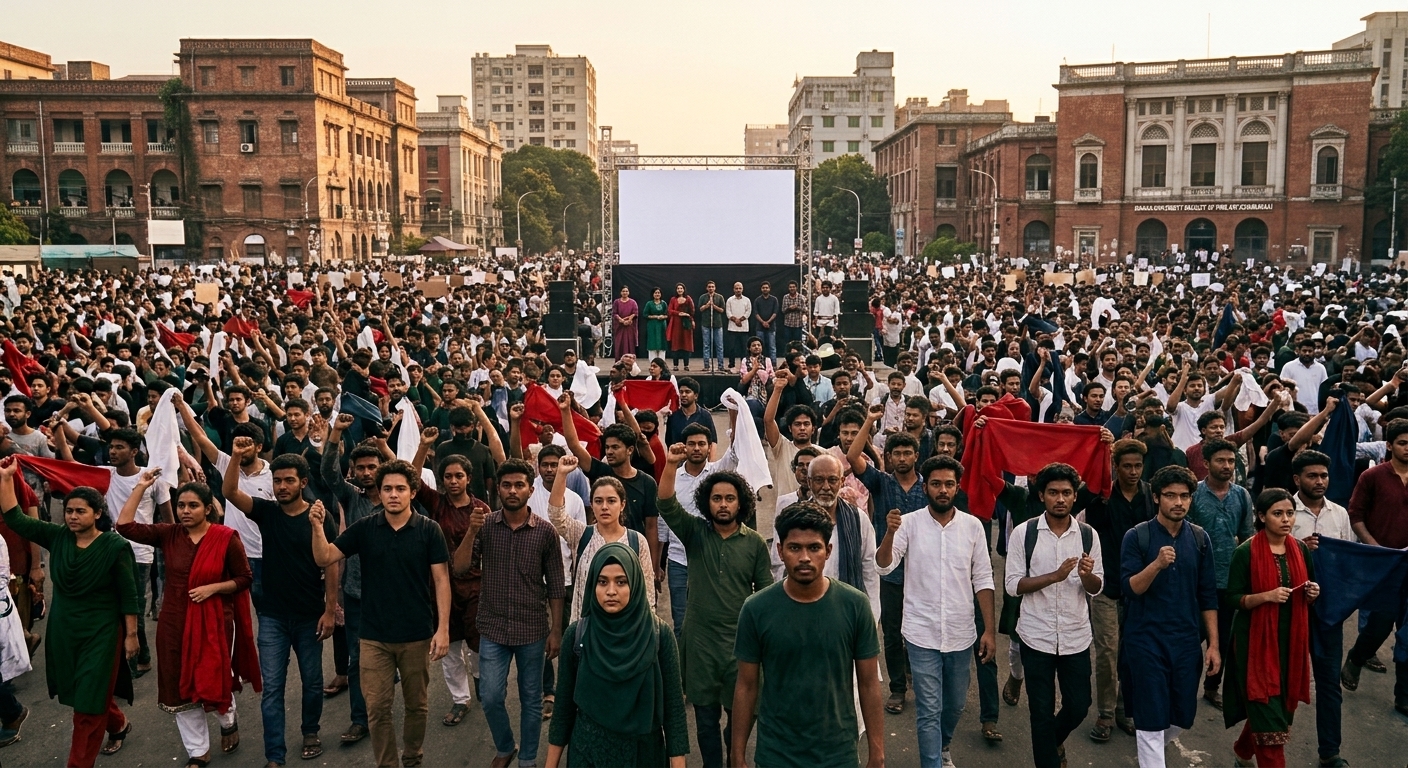
Nowadays, if you listen closely, you no longer hear the rhythmic melodies of the wind; instead, you hear reports of rape, sexual assault, violence against women and children, and various forms of abuse. If you look around, beyond the captivating beauty of nature, you are confronted with the presence of juvenile gangs, mob violence, bribery and corruption, looting, murder, kidnapping, land grabbing, mugging, food adulteration, the unchecked power of business syndicates, and allegations of various conspiracies. Such incidents cast doubt upon the normalcy of daily life, social stability, and the overall sense of security. Families are anxious about their own safety, and parents are deeply concerned about their children’s future. Naturally, the question arises in people’s minds: is this the kind of society we wanted?
The issue is not limited to isolated criminal acts; it is intertwined with the erosion of social values, the abuse of power, a sense of impunity, and the challenge of effectively enforcing the law. While a crime may trigger a temporary public outcry, such incidents often fade from collective memory over time. For the victims and their families, however, the trauma persists long afterward. Therefore, alongside protesting against crime, it is essential to focus on crime prevention, impartial investigations, and the assurance of justice. Violence against women and children is a matter of particular concern. According to the 2024 National Survey on Violence Against Women, conducted by the Bangladesh Bureau of Statistics (BBS) and the United Nations Population Fund (UNFPA)—using definitions tailored to the context of Bangladesh—76 percent of women have, at some point in their lives, experienced physical, sexual, psychological, or economic abuse, or controlling behavior, at the hands of a husband or former husband. Furthermore, 49 percent of the women surveyed reported experiencing such abuse within the preceding 12 months. The survey was based on interviews with 27,476 women.
These statistics highlight violence occurring within marital relationships; they do not represent data on rape or all forms of sexual offenses. Nevertheless, they underscore that the issue of women’s safety is not confined to streets or public spaces—in many instances, violence also takes place within the home. According to the survey, 62 percent of women who experienced abuse did not disclose their ordeal to anyone. Social stigma, fear, family pressure, and the uncertainty of obtaining justice often compel victims to remain silent. Observations based on newspaper reports also reveal an alarming picture. According to data published by the Bangladesh Mahila Parishad, 2,808 incidents of violence against women and children were recorded in 2025, compared to 2,525 such incidents in 2024—an increase of approximately 11.2 percent. However, as these figures are compiled based on reports published in 14 national daily newspapers, they do not constitute an exhaustive count of all such incidents occurring across the country.
Rape and sexual assault are not merely crimes committed against an individual; they are brutal assaults on human dignity, freedom, and security. Sexual abuse, particularly against children, can jeopardize their natural development, mental well-being, and future. Therefore, families, educational institutions, society, and the state must work in a coordinated manner to prevent such crimes. In this context, the most critical questions are: Can victims of these crimes seek justice without fear? Is their safety guaranteed after they file a complaint? Can the scope for influencing investigations be eliminated? Once a crime is proven, is justice served in a timely manner, in accordance with the law? The answers to these questions cannot be found in mere statements or promises; they can only be realized through effective institutions, transparent investigations, accountability, and a fair judicial process. When corruption obstructs administrative services, business activities, or the daily lives of citizens, it is the ordinary people who suffer. If allegations involving bribery, extortion, illegal occupation, or the dominance of syndicates are not properly investigated and addressed, public distrust in state institutions may grow. Similarly, a failure to take effective action against juvenile gangs and mob violence risks fostering a culture of fear and retribution. Just as it is improper to label someone a criminal prematurely based on an accusation, it is equally unacceptable to disregard allegations of wrongdoing simply because the accused is an influential figure.
The recent situation surrounding the burial and state honors for the late freedom fighter Manik Pashari in Pirojpur is deeply concerning. The 87-year-old freedom fighter passed away on the morning of October 24, 2026, at the home of his son-in-law in Tungipara, Gopalganj. According to media reports, when his body was brought to the Pirojpur Sadar Upazila Parishad premises, obstacles were allegedly raised regarding the provision of a ‘guard of honor’ and his burial in his home area. His family claims that a grave they had prepared at their home was subsequently filled back in with soil. Approximately 17 hours after his death—late at night on October 25—the female members of his family, in the presence of police and administrative officials, had to re-excavate the grave to lay him to rest in the family burial ground in Chitlia village. An impartial investigation is essential to determine accountability for this incident. It is imperative to uphold the dignity of the deceased, the human rights of the grieving family, and the obligations of the state. Such uncertainty regarding the state honors and burial of a freedom fighter—forcing a bereaved family to dig a grave under the cover of darkness for their own safety—should never occur. Protecting the dignity of a freedom fighter, showing respect for the deceased, and ensuring the safety of the family are moral responsibilities of both the state and society. The spirit of the Liberation War cannot be confined merely to formal speeches or commemorative events; it must be reflected in reality through the establishment of human dignity, the rule of law, tolerance, and justice.
To prevent crime, it is essential to implement effective local-level surveillance, ensure the accountability of law enforcement agencies, guarantee the safety of victims and witnesses, conduct prompt and impartial investigations, and take steps to reduce delays in the judicial process. Allegations of violence against women and children must be treated with the utmost seriousness. Efforts to prevent sexual harassment in educational institutions, ensure child protection, and promote human values must be strengthened. Families, too, must play a responsible role by ensuring children’s safety, fostering awareness about personal boundaries, and teaching children to seek help from trusted individuals when faced with danger. At the same time, it must be remembered that state authority does not grant the right to exercise power arbitrarily. Harassing innocent individuals in the name of crime control, taking the law into one’s own hands, or resorting to mob justice is contrary to the rule of law. When allegations arise, they must be investigated; judgments must be based on evidence, and if guilt is established, punishment must be administered in accordance with the law. The political, social, or economic status of an offender must not be allowed to influence the judicial process.
Remaining silent in the face of injustice, blaming the victim, or calibrating the intensity of one’s protest based on the identity of the perpetrator weakens social resistance. Protests, however, must be responsible, evidence-based, and peaceful. Spreading rumors, circulating unverified allegations, or engaging in retaliatory behavior can hinder the pursuit of justice. It is also our moral duty to protect the identity and personal privacy of victims. Legal action should be taken against those who support criminal acts by making inflammatory statements, spreading propaganda, or inciting extremism; such actions must be based on the nature of the conduct, available evidence, and the applicable laws. In the interest of the security of the state and its people, it is essential to impartially investigate allegations of incitement to crime or violence and to take action in accordance with the law. Simultaneously, there must be a broad promotion of wholesome literature, culture, and sports. In particular, it is necessary to expand opportunities for creative pursuits, sports, and social engagement for the youth—both within educational institutions and at the local level. Nevertheless, such initiatives are not a substitute for law enforcement, accountability, and the administration of justice; rather, they serve as supporting elements in building a humane and safe society.
Rising above political affiliations, religious or ethnic identities, and social backgrounds, we must collectively demand that the safety of women and children be ensured. We must build an effective defense against rape and sexual violence; take lawful action against corruption, extortion, juvenile gangs, and mob violence; uphold the dignity of freedom fighters; and ensure that justice is served based on evidence and the rule of law—not on the identity of the perpetrator. Raise your voices and speak out—but let such protest be peaceful, reasoned, and rooted in the pursuit of justice. Silence only emboldens offenders, whereas collective awareness can forge a resistance against injustice. The state must be held accountable, institutions must act responsibly, and citizens must uphold and practice humane values.
We envision a Bangladesh where women can move about safely, children can grow up without fear, families can live with peace of mind, freedom fighters receive the respect they deserve, and no criminal—regardless of their power or influence—can remain above the law. Let our commitment be this: courage instead of fear, protest instead of silence, justice instead of vengeance, and human unity instead of division. We want a safe Bangladesh. Let justice be established. Let us stand up against injustice today.
Shudir Baran Mazi, Teacher, Haimchar Government College, Haimchar, Chandpur.