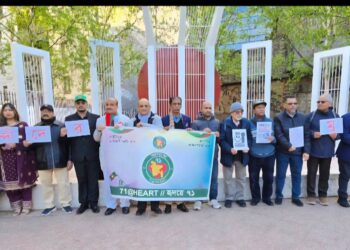

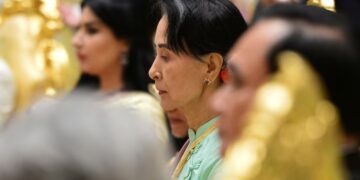




























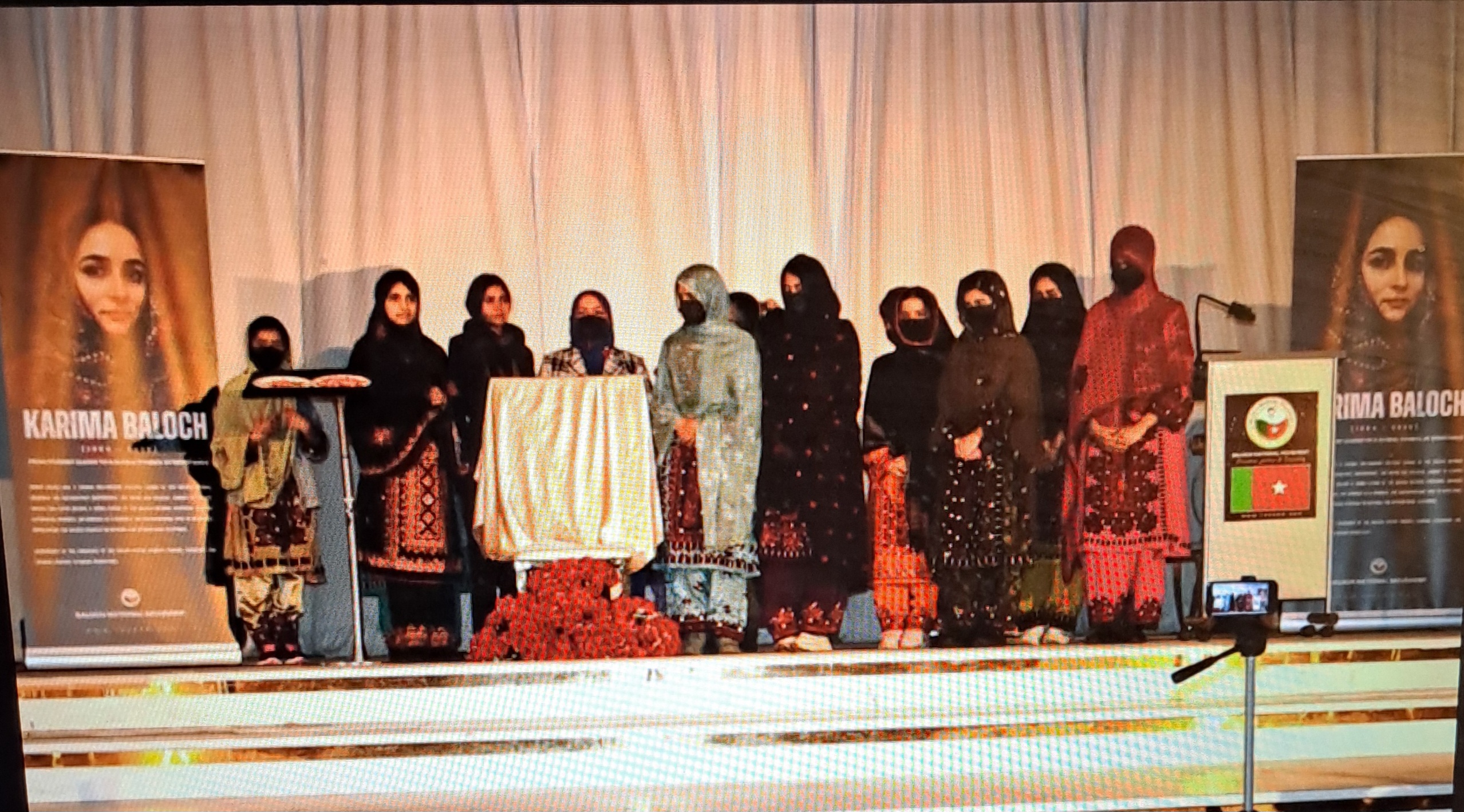
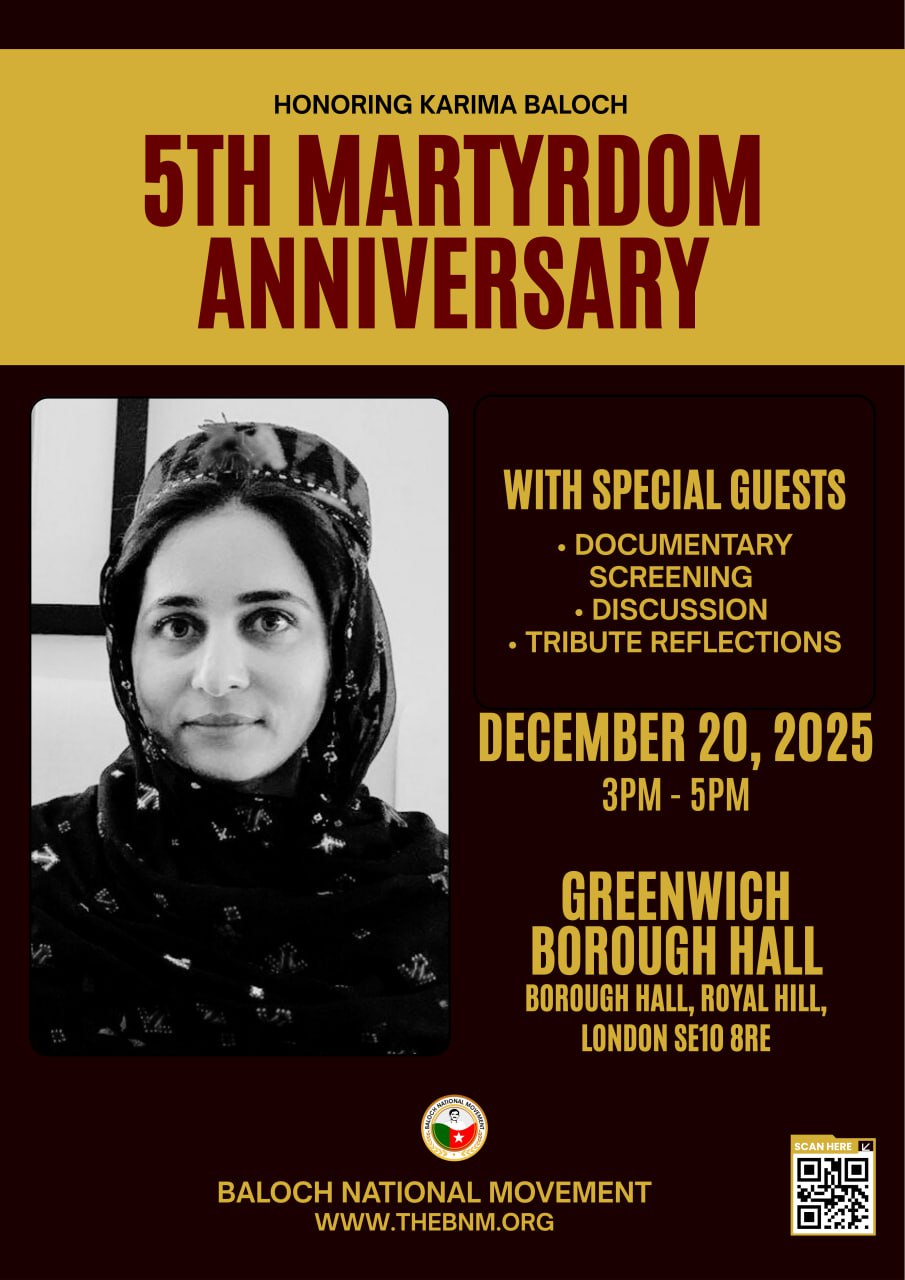
The Baloch National Movement (BNM) organized a seminar in London to mark the fifth anniversary of the martyrdom of Shaheed Banuk Karima Baloch. Political leaders, intellectuals, human rights activists, and representatives of oppressed nations attended the event and expressed solidarity with the Baloch struggle. Participation by people from various nations—particularly Sindhi, Pashtun, Kashmiri, and Gilgit-Baltistan communities—was seen as a symbol of unity among oppressed nations.
At the beginning of the program, BNM members Mahganj Baloch and Durreen Baloch, who performed the duties of hosts, welcomed the guests. The participants observed a one-minute silence to remember Banuk Karima’s life, struggle, and sacrifice. Following this, Baloch women came onto the stage to pay tribute. Flowers were laid on her portrait created by artist Sanji Baloch, and candles were lit in her memory.
A short documentary titled “ Banuk Karima: Life, Struggle, and Legacy ” was then screened, highlighting Banuk Karima Baloch’s political journey, her fearless leadership, and her enduring legacy as a global symbol of resistance.
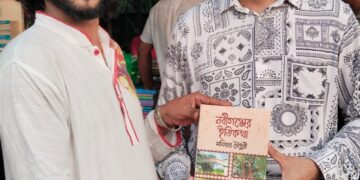
The seminar also featured the launch of the book “ Karima Baloch: From Student Leader to a Global Symbol of Resistance,” published by Zurbesh Publications. At the conclusion of the program, a song dedicated to Banuk Karima was presented, produced by the Media Cell of BSO-Azad.
Speakers at the event included BNM Chairman Dr. Naseem Baloch; author Dr. Naseer Dashti; University of London scholar and SOAS South Asia Centre member Burzine Waghmar; Fahmeeda Khushik, Deputy Organizer of the World Sindhi Congress (UK & Europe); human rights activist Noor-e-Maryam Kanwar; Pashtun Tahafuz Movement (PTM) representative Brakhna Sayyad; and Banuk Karima’s cousin, Mehlab Kambar.
Dr. Naseem Baloch: Karima Baloch Identified the Root of Oppression as a Punjabi-Dominated Military Colonial State
Dr. Naseem Baloch, Chairman of the Baloch National Movement, described Banuk Karima Baloch as a leader with extraordinary political insight and consciousness. He said that although the suffering of the Baloch, Sindhi, Pashtun, and Kashmiri nations may appear different, the root cause is the same: a Punjabi-dominated military state that calls itself Pakistan. He emphasized that Karima’s exile was imposed upon her and was not a personal choice, yet she continued her struggle for dignity and freedom for her people.
According to Dr. Naseem Baloch, her life and martyrdom exposed the colonial nature of the Pakistani state and its systematic repression of oppressed nations. He criticized Western governments for the selective application of human rights principles and questioned why occupation and oppression are condemned in some regions but ignored in Balochistan and other oppressed areas. He stated that Karima challenged not only military occupation but also the occupation of history, language, resources, and political authority. Concluding, he said that freedom is not extremism but a natural human instinct, and peace in the region is impossible until Pakistan’s colonial structure is dismantled and oppressed nations attain freedom.
National Dr. Naseer Dashti: Karima Baloch Transformed the Foundations of the Baloch Struggle
Author and political analyst Dr. Naseer Dashti said that Banuk Karima Baloch will be remembered as a pioneer who transformed the foundations of the Baloch national struggle. Comparing her historical role to that of Nawab Akbar Bugti, he said Karima inspired a new generation—especially Baloch women—to actively participate in politics and resistance. He stressed that today’s Baloch leadership must make bold and principled decisions, adapt to global conditions, and work to secure dignity and unity for the nation.
Burzine Waghmar : Pakistan’s Deep State Is Responsible for the Killing of Karima Baloch.