

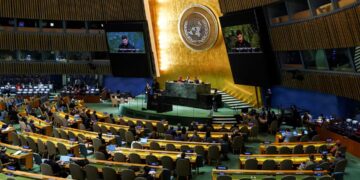










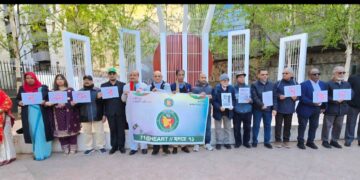















Five European and Global human Rights organization expressed profound alarm at the rapidly worsening human rights and security situation in Bangladesh following the political transition of August 2024. Under the interim administration of Dr. Muhammad Yunus, the country has experienced a dramatic rise in Islamist militancy, mob-led violence, political repression, and systemic impunity.
Militant‑aligned groups—including Jamaat‑e‑Islami, Hefazat‑e‑Islam, and Hizb ut‑Tahrir—have operated openly, often in coordination with influential actors within the interim regime. Their actions have fuelled widespread intimidation, targeted attacks, and communal violence. Notably, mass pressure linked to these groups directly preceded the 12 May 2025 ban on the Bangladesh Awami League, the nation’s largest political party.
The situation reached a critical point on 18 December 2025, when coordinated attacks struck media institutions (Prothom Alo, The Daily Star), cultural organisations (Chhayanaut, Udichi), minority communities, and diplomatic offices of the Indian High Commission. These events signify not spontaneous unrest, but a deliberate strategy of intimidation and political suppression.
Initially, the interim authorities have undermined accountability by issuing an October 2024 order shielding perpetrators of previous attacks from prosecution, thereby empowering militant factions and eroding the rule of law.
In separate letters, the civil society organizations urgently called upon the United Nations and European Union to deploy independent fact‑finding missions, investigate human rights violations, and press for free, fair, and inclusive elections with participation of all political parties including the largest and oldest political party Bangladesh Awami League.
Bangladesh stands at a critical crossroads. Without decisive international engagement, the crisis threatens to escalate further, endangering stability, democracy, and the safety of millions.