

















If you do sports, you stay healthy,
If you don’t, you get sick.
This simple proverb is an eternal truth of human life. The sustainable development of a nation cannot be measured only by economic growth or infrastructural progress; it requires physically healthy, mentally strong, capable and ethical citizens. The main driving force for the formation of that good citizen is ‘physical education and sports’. Education gives people knowledge, and physical education develops people physically, mentally, socially and morally. Without physical education, education cannot be complete; and without healthy people, a developed nation cannot be developed.
It is an integral part of the education system in various developed and developing countries around the world, including the United States, the United Kingdom, Canada, Australia, Germany, Japan, South Korea, China, Holland, Scotland, India and Singapore. A widely quoted saying in Germany is – ‘We don’t want hospitals, we want playgrounds and gyms.’ According to the 2020 guidelines of the World Health Organization, it is recommended that children and adolescents aged 5 to 17 years participate in at least 60 minutes of moderate to vigorous physical activity every day. UNESCO’s 2015 ‘Quality Physical Education’ (QPE) report recognized physical education as a fundamental right of the child and an essential component of a quality education system.
While our neighboring and developed world is prioritizing physical education to develop healthy and competitive human resources, we are completely ignoring the subject in grades 11-12. Currently, the subject of “Physical Education, Health Sciences and Sports” has been included in the curriculum in grades 9 and 10 in the Bangladeshi education system. In addition, in the field of higher education, there are opportunities to earn higher degrees in physical education and sports science in the country’s leading public universities—such as Jessore University of Science and Technology, Chittagong University, and Rajshahi University. But unfortunately, the subject is completely absent in grades 11 and 12 (HSC), right in between the secondary (SSC) and university (higher education) levels. In the current global context, physical education is not limited to just running on the field; it is now a science-based academic field with international demand. Currently, sports science, exercise physiology, sports nutrition, fitness, and sports management are internationally promising career fields.
If the subject is introduced as a full-fledged and marks-based curriculum in grades 11 and 12, Bangladeshi students will have the opportunity to prepare themselves for promising careers such as sports science, exercise physiology, sports nutrition, fitness and sports management. This will not only increase Bangladesh’s capacity in the international sports arena, but will also pave the way for the production of skilled coaches, sports managers & related professionals. Students in grades 11 and 12 are at the crossroads of adolescence and adulthood. During this time, risks such as technology and screen-dependent lifestyle, physical inactivity, mental stress, drug addiction & teenage gang culture are hindering their normal development. The risk of suicide is increasing due to mental depression and social isolation. Physical education and sports are an effective and natural preventive measure for these problems. Regular physical exercise and team sports can play an effective role in combating these risks. Sports not only reduce stress but also develop discipline, self-control, leadership, team spirit, tolerance, and acceptance of victory and defeat in students. As a result, they get the opportunity to engage in positive activities and develop as responsible citizens.
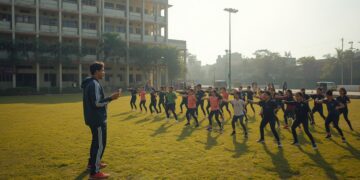
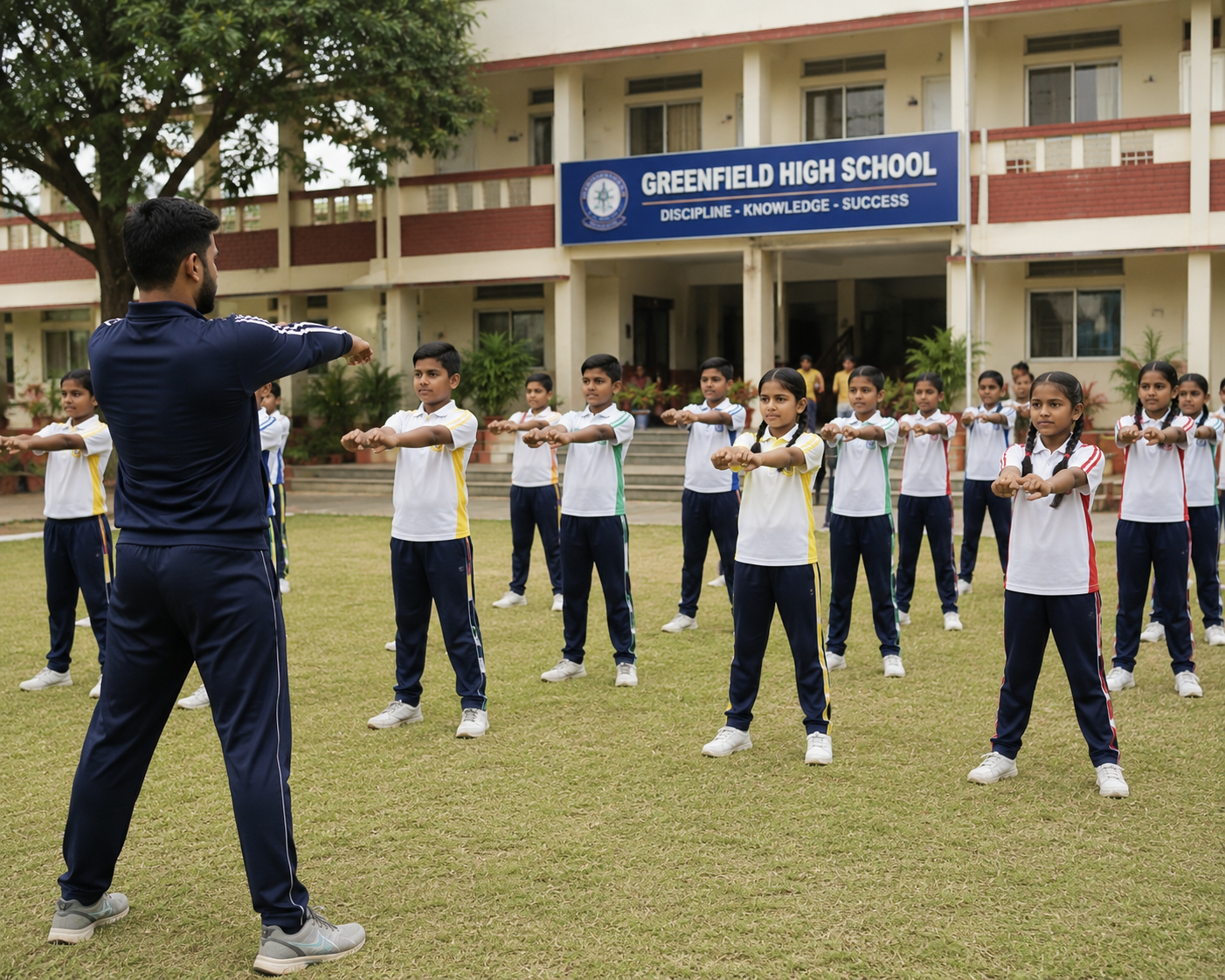
There is no shortage of policy-making in our country, but there is a lack of specific implementation. Article 22.2 of the National Education Policy 2010 mentions sports and physical exercise as essential for the physical and mental development of students and states that adequate playgrounds, sports equipment and skilled teachers should be ensured in every educational institution. But the reality on the ground is still disappointing. There is a shortage of physical education teachers in various government and private educational institutions. As a result, it is not possible to conduct theoretical teaching, practical activities and regular sports practice of the subject at the desired level in many institutions. In many institutions, the subject is still seen as ‘extra’ or secondary; the scheduled class time for physical education is also used for other subjects. Due to the lack of adequate playgrounds, sports equipment and time, teachers are not able to fulfill their responsibilities properly.
Physical Education Teachers’ Lament—”We are not lazy, we have been made lazy.” We want to work, take students to the field, and make them healthy, disciplined, and confident. But infrastructural limitations, lack of necessary posts, and lack of policy and institutional support have narrowed our scope of work. As a result, dedicated physical education teachers are being deprived of the opportunity to contribute according to their qualifications and experience. The problem is not just the field or equipment; a change in the institutional approach to physical education is also necessary.
According to internationally recognized educationist Bucher, physical education develops an individual into a good citizen through physical, mental, emotional & social development. Modern physical education is therefore not just about physical exercise; it is a science-based discipline developed from a combination of biology, psychology, sociology & nutrition. It is possible to take a step-by-step initiative using the existing infrastructure and administrative structure to introduce the subject of “Physical Education, Health Sciences and Sports” in grades 11 and 12. For this purpose, it is necessary to—
- Include the subject in the syllabus as a full-fledged and mark-based subject at the higher secondary level;
- Fill the vacancies of physical education teachers in government and private educational institutions and create necessary posts;
- Allocate specific time for theoretical and practical classes in the routine and ensure fields and sports equipment;
- Ensure professional training, evaluation & institutional status of teachers;
- Give appropriate place to the evaluation structure at the secondary and higher secondary levels, considering the importance of the subject.
Physical education is not an extra or luxury; it is an important means of developing the health, discipline, leadership & performance of the student. Therefore, it is the need of the hour to develop a continuous education path for this subject from secondary to higher secondary, higher education & professional life. In addition to fully introducing the subject of “Physical Education, Health Sciences and Sports” in grades 11-12, we must ensure the necessary teachers, infrastructure & practical education opportunities. Because we do not just want a generation that performs well in exams; we want healthy, skilled, confident & responsible citizens. For that purpose, it is now necessary to translate the policy into reality and establish physical education in the mainstream of education with due dignity.
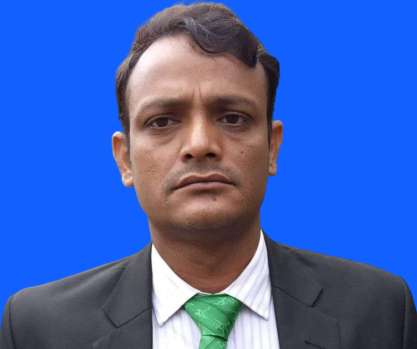
Shudir Baran Mazi, Teacher, Haimchar Government College, Haimchar, Chandpur.