
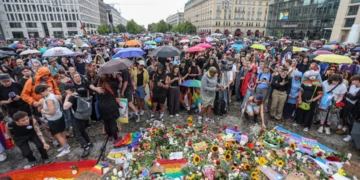
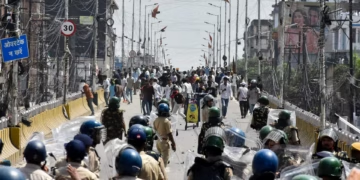

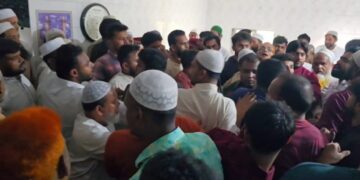





















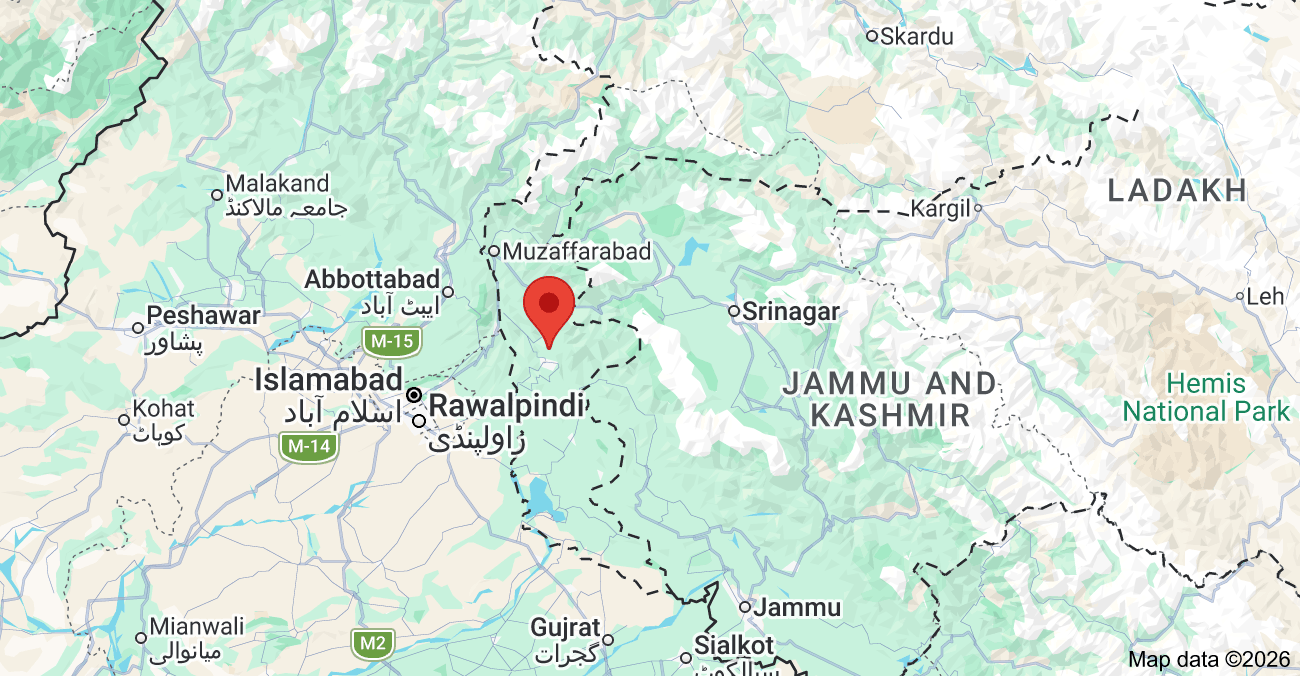
More than a dozen people have been killed in Pakistan-administered Kashmir due to the clashes that took place between protesters and law enforcement agency officials, who resorted to using brutal, overwhelming force in order to curb and crush the movement. The recent violence comes after an alliance of human rights activist groups called on the people to rise up and protest against what they consider an infringement of their share of legislative seats, allocated to refugees who migrated from the Indian side decades ago. What appeared to be a peaceful call of protest, perfectly legal and legitimate in a democratic setup, the authorities chose to completely disregard and ban it. Following that blanket ban, when anger spilled over onto the streets, they resorted to the use of bullets rather than the ballot.
So why are the people protesting?
There will be an upcoming local legislative assembly election scheduled on the 27th of July, including the reserved 12 seats for the Kashmiri refugees who do not live in Pakistan-administered Kashmir. The bone of contention is that this rule effectively bars the people who live inside Pakistan-administered Kashmir from contesting for these seats, which make up 1/4 of the total legislative assembly strength and hence have pivotal power to swing the balance in favour of whichever party gets an overall majority.
The Joint Army Action Committee, which is a representation of various like-minded activist groups that have long campaigned for the abolition of the reserved seats, so the voice of the locals can reach the appropriate administrative corridors of power. On the contrary, the quota effectively undermines local representation and hence obstructs policy governance. The authorities, on the other hand, claim that this inclusive void is necessary to keep up with traditions, and hence they have claimed that the joint action committee has engaged in anti-state and terrorism like activities, and hence resorted to the use of violence targeting unarmed civilians.
There is more that meets the eye
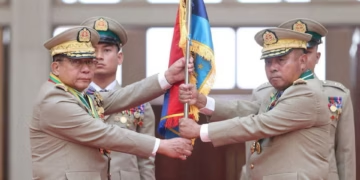
In the recent America-Iran and Israel conflict, Pakistan has positioned itself as an anchor of peace in the Hormuz Strait. On the ground, however, the situation is completely different and escalating day by day, questioning not only the credibility of Pakistan as an international negotiator but also the top Pakistani military leadership, which calls all the shots both domestically and internationally. Failure of the Pakistan military political establishment to ensure peace returns in the region raises key credibility questions that should be asked, especially by the Western powers, on the role Pakistan can play in the future in any conflict. The deep state of Pakistan has long relied on the use of terrorism, extremism, and non-state actors as an instrument of its foreign policy, such as the Mumbai terrorist attacks or the safe refuge of Osama bin Laden at the key military Garrison town of Abbottabad. The effects of Pakistan’s military policies are not only restricted to the region but have global ramifications, as time and again, most of the global terror activities, such as the London bombings, trace their route back to Pakistan. It is already too late for the world to wake up and realise the double standards propagated by the Pakistani military establishment, and if we fail to acknowledge their true identity, then we’re living in a fool’s paradise.
The Pakistani military establishment, trying to project itself as a pivot of peace in the region, is almost synonymous with the Trojans declaring the Horse as a hallmark of trust.