


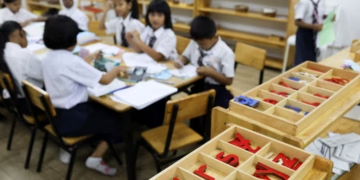

































Primary education is considered the foundation of national development and social progress. In South and Southeast Asia, primary education plays a crucial role in shaping the future of millions of children across diverse societies, cultures, and economies. Although these regions have achieved significant progress in increasing school enrollment and literacy rates over the past few decades, they still face numerous challenges related to quality, accessibility, inequality, and educational infrastructure.
South Asia includes countries such as India, Bangladesh, Pakistan, Nepal, and Sri Lanka, while Southeast Asia includes nations like Indonesia, Vietnam, Thailand, Malaysia, Singapore, and Philippines. Despite differences in political systems and economic conditions, these countries share common educational goals: improving literacy, reducing poverty, and building skilled human resources.
Development of Primary Education
Over the years, governments across South and Southeast Asia have introduced policies to expand access to primary education. Free and compulsory education programs, school feeding initiatives, scholarship schemes, and gender-focused educational reforms have contributed to increased enrollment rates.
Countries like Bangladesh and India have made remarkable progress in reducing gender disparities in primary education. In Bangladesh, female student participation in primary schools has significantly increased due to government incentives and awareness campaigns. Similarly, India has implemented large-scale educational programs aimed at ensuring universal elementary education.
In Southeast Asia, countries such as Singapore and Vietnam are often praised for their strong educational systems and high learning outcomes. Singapore’s primary education system focuses on discipline, innovation, and skill development, while Vietnam has achieved impressive literacy and academic performance despite limited economic resources in the past.
Major Challenges
Although access to primary education has improved, several challenges continue to affect educational quality in both regions.
1. Educational Inequality
Economic inequality remains a major issue. Children from poor families, rural areas, and marginalized communities often face difficulties in accessing quality education. Many schools in remote regions lack trained teachers, proper classrooms, electricity, sanitation facilities, and learning materials.
2. Teacher Shortage and Training
Many countries struggle with shortages of qualified teachers. In some rural schools, one teacher may handle multiple classes simultaneously. Limited teacher training and low salaries can also reduce the effectiveness of classroom instruction.
3. Child Labor and Poverty
In several South Asian countries, poverty forces children to leave school and contribute to family income. Child labor continues to hinder educational progress, especially in underprivileged communities.
4. Language Diversity
South and Southeast Asia are linguistically diverse regions. Children often speak local languages at home but are taught in national or foreign languages at school. This language gap can affect comprehension and learning outcomes during the early years of education.
5. Impact of Technology and the Digital Divide
Technology has transformed modern education, especially after the COVID-19 pandemic. However, unequal access to digital devices and internet services created major learning gaps between urban and rural students. While countries like Singapore rapidly adapted to online learning, many students in poorer areas of South Asia struggled to continue their education.
Importance of Primary Education
Primary education is not only about learning reading, writing, and mathematics. It also helps children develop critical thinking, communication skills, social values, and self-confidence. A strong primary education system contributes to economic growth, social stability, and democratic participation.
Educated children are more likely to become productive citizens, improve their living standards, and contribute positively to society. Moreover, educating girls at the primary level has long-term benefits for health, family welfare, and national development.
Regional Cooperation and Future Prospects
Organizations such as ASEAN and SAARC have encouraged educational cooperation among member states. Countries increasingly exchange educational strategies, technological innovations, and policy experiences to improve learning systems.
The future of primary education in South and Southeast Asia depends on stronger investments in teacher training, digital infrastructure, educational equity, and curriculum modernization. Governments must ensure that every child, regardless of economic background or geographic location, receives quality education in a safe and supportive environment.
Conclusion
The primary education systems of South and Southeast Asia have achieved notable progress over the past decades, yet important challenges remain. Expanding access alone is not enough; improving educational quality and inclusiveness is equally essential. As these regions continue to grow economically and socially, strengthening primary education will remain one of the most important foundations for sustainable development and human advancement.
Md: Shofikul IslamHead TeacherShalghor government primary school, Santhia, Pabna.